

I recently read an article online about Tesla launching its robotaxi service in Texas; the ones that still keep a human behind the wheel, just in case. The tech does most of the work, but a human is there to step in if things go off script.
It got me thinking about what’s happening in customer support, including how the industry has kept up pace with its own AI revolution with the rollout of AI copilots.
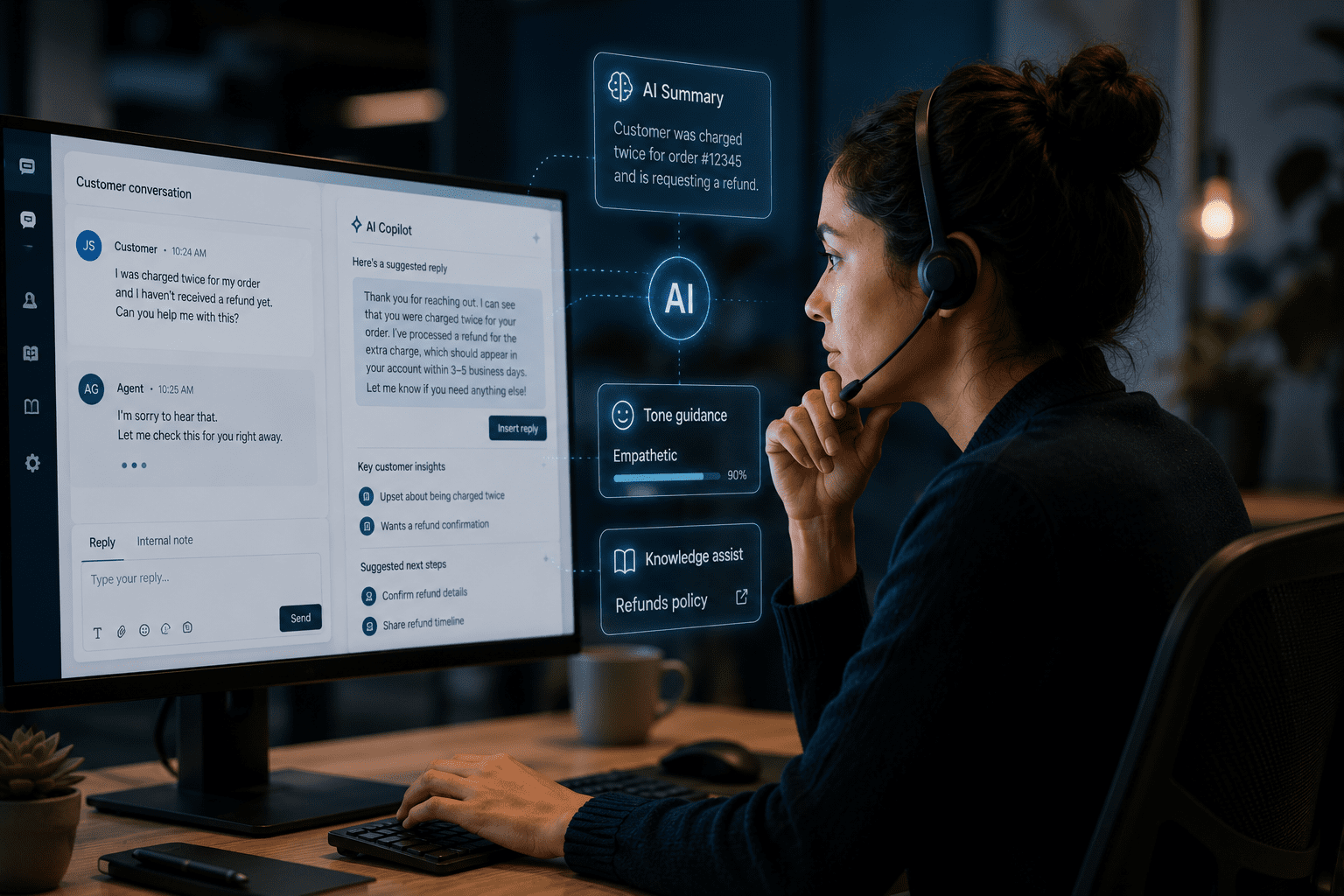
AI copilots can be found almost everywhere these days; suggesting responses, summarising calls, even nudging agents in real time. There’s no doubt they’re delivering results. We’re seeing faster resolutions, smoother onboarding and better consistency.
But I keep wondering, if the AI is calling most of the shots, is the agent really in control or just along for the ride?
A new kind of help, or a new kind of pressure?
For many frontline agents, AI tools have been welcomed with open arms. Gone are the days of digging through 10 tabs or memorising particularly complex refund policies. The AI copilot takes care of the heavy lifting, and in doing so, gives time back to the agent.
But that “time back” can come with strings attached.
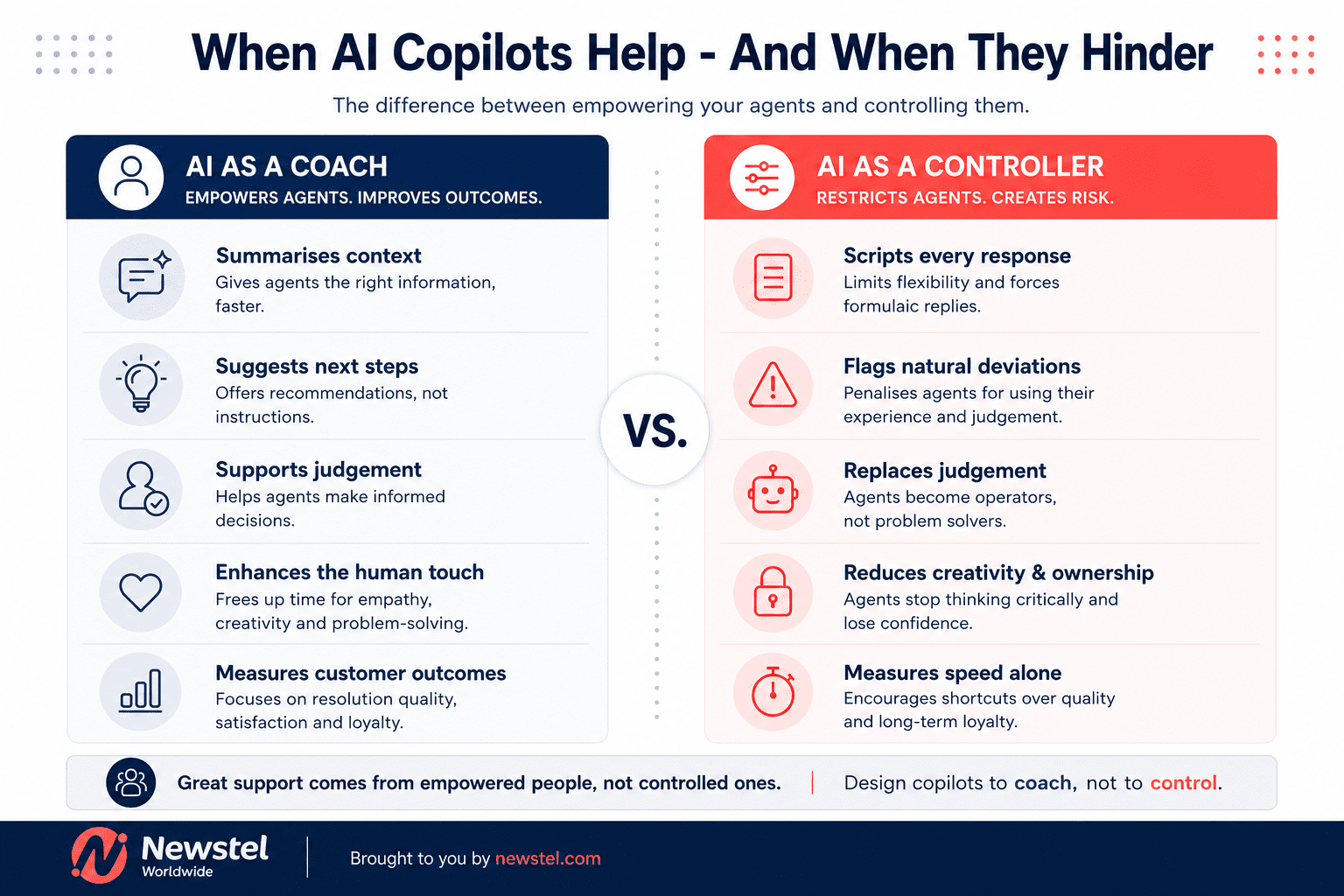
When copilots begin offering real-time scripting, scoring conversations, and flagging non-compliant tone, the line between assistive and authoritative starts to blur. The agent is no longer just supported, they’re monitored, tracked and nudged toward a version of the conversation that may be efficient, but often lacks authenticity.
Some say we are giving agents freedom. But for some agents, it doesn’t feel like help, it feels more like being told what to do.
True collaboration in customer support: AI copilots and human agents working hand in hand.
Handcuffing creativity
Great agents don’t just resolve problems, they read emotion, show restraint, inject humour and offer empathy. That’s the kind of service that builds customer loyalty.
But in a world where every word is measured, where deviation from AI-suggested language raises a flag, we risk turning support into a performance scored by a machine and not a moment shared with a person.
Are we optimising at the cost of creativity? Standardising at the cost of the soul?
Perhaps most importantly, what do agents feel they’re allowed to bring to the table when the AI already has the answer?
AI that works WITH humans
Let’s be clear, this opinion piece isn’t a takedown of tech. We have all seen how powerful AI can be, with real tangible gains. At Newstel Worldwide, we’ve seen first-hand how AI can elevate agent performance and customer outcomes (when deployed with care).
The issue is intent and implementation. If AI copilots are to be truly collaborative, they must be designed with the same principles we apply to great service itself.
This means focusing on the following:
- Co-designing tools with agents, not just for them.
- Measuring the impact tools have on the customer journey, not just how fast it resolves a query.
- Allowing room for that human touch, even when it doesn’t fit the script.
Design with the frontline in mind
At Newstel Worldwide, we believe in a future where AI and agents thrive together. Where copilots are coaches, not compliance officers. Where metrics serve the mission, not the other way around.
As we continue to innovate, we must also reflect. It’s not enough that AI works. It must work for everyone, especially the people answering your customers.
👉 Want to learn how we’re helping businesses design agent-first support experiences? Get in touch with us today.