


When a customer needs help with a failed payment, an urgent delivery issue or a product question, waiting until the next business day can turn a straightforward query into a poor experience.
Real-time customer support means giving customers a useful response while the issue is still live. Delivering that help in their preferred language makes the interaction clearer, reduces unnecessary back-and-forth and helps your team resolve the right problem first time.
If you are serving customers in more than one market, the challenge is rarely just translating replies. You need to give people clear, useful help quickly while keeping the experience consistent with your brand across languages and channels.
What is real-time multilingual customer support?
Real-time multilingual customer support is immediate or near-immediate help for customers in more than one language. It can take place through live chat, phone, social messaging or another channel where customers expect a quick response.
The important distinction is between a quick acknowledgement and a useful resolution. A good real-time support experience gives the customer clear next steps, accurate information and a route to the right person when their issue needs more specialist help.
It also takes more than language coverage. Your team needs product knowledge, clear escalation rules and a shared view of the customer’s history. That is what helps you keep the quality of each response consistent, wherever the customer is and however they choose to get in touch.
Real-time support is not the same as 24/7 support
These terms are often used together, but they describe different things.
- Real-time support describes how quickly a customer receives help.
- 24/7 support describes when that help is available.
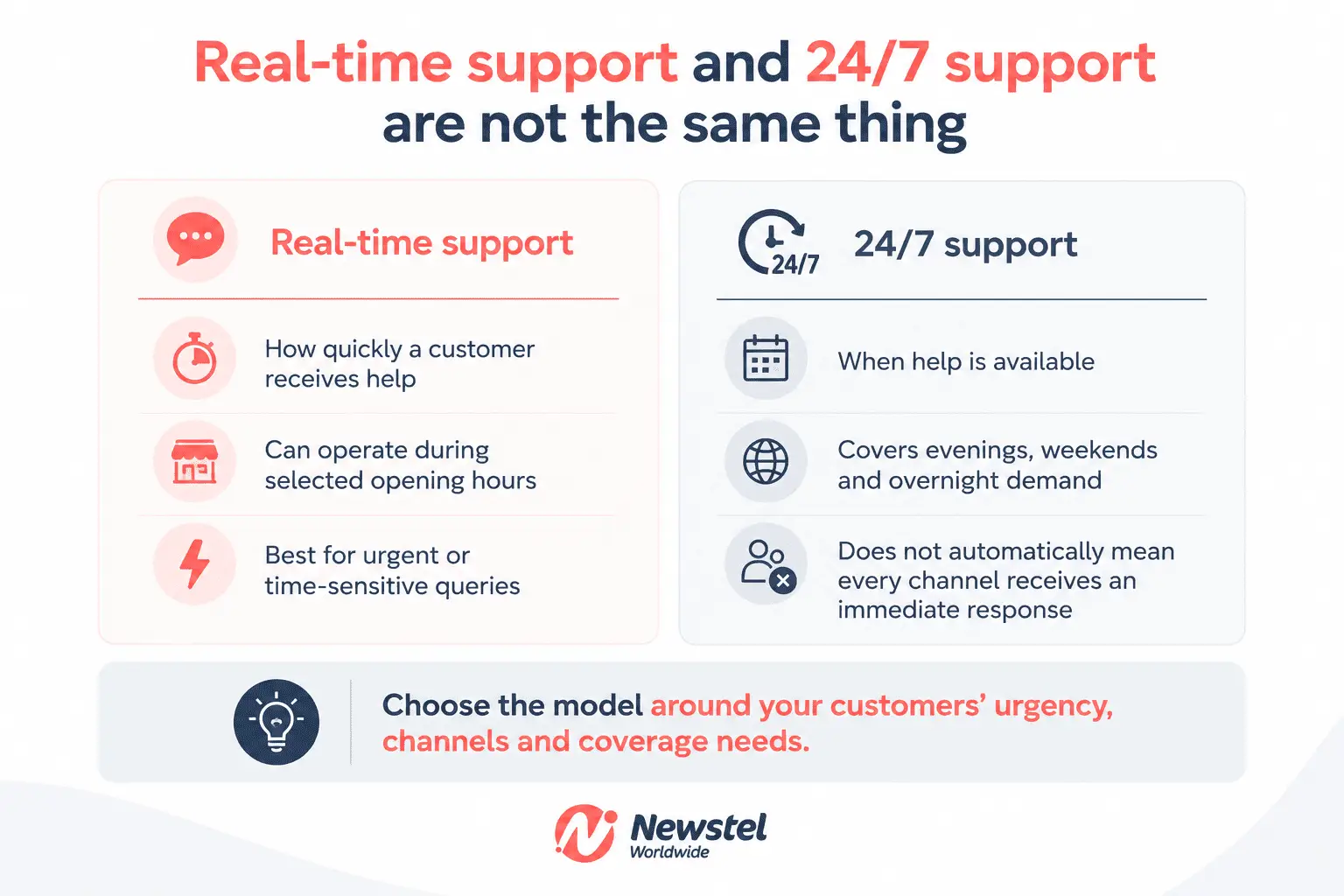
You might offer real-time chat during defined opening hours without operating through the night. Or you may provide 24/7 coverage but respond more slowly to lower-priority channels such as email.
Before committing to either model, focus on what your customers actually need. For urgent, high-value or time-sensitive queries, a fast response may matter more than a blanket promise of round-the-clock availability.
Why support in a customer’s preferred language matters
Fast replies are useful only when customers can understand them and act on them.
Supporting customers in their preferred language can help you:
- reduce confusion around orders, returns, payments and account issues;
- make it easier for customers to explain a problem accurately;
- avoid delays caused by manual translation or repeated clarification;
- keep brand tone and service standards more consistent across markets; and
- show customers that you are ready to support them after purchase, not simply sell to them.
This matters most when a generic response will not solve the problem. A delayed delivery, product safety concern or account access issue needs a clear answer, not just an automated acknowledgement.
Choose the right real-time channels

You do not need to be present everywhere from day one. Start with the channels your customers already prefer when they need urgent help, then make sure each one has a clear purpose.
Live chat
Live chat works well when customers need quick help while browsing, checking out or managing an existing order. It is ideal for straightforward questions, but you should make hand-offs clear when an issue becomes more complex. Read more about multilingual live chat support.
Phone support
Phone support is often the right choice for sensitive, urgent or high-friction queries. It gives customers space to explain the full context and lets an adviser clarify the issue in real time.
Messaging and social channels
Messaging can give customers a convenient, informal way to ask short questions. It still needs clear routing rules, service-level expectations and a simple way to move more complex cases into the right support queue.
The aim is to provide a reliable experience where it matters most, rather than trying to cover every channel at once.
Build speed and quality into your support process
As demand grows, it becomes harder to provide quick support in multiple languages when every adviser has to search for answers, translate messages manually or work out who owns a case. A consistent operating model will help you maintain quality as you scale.
Start with the languages your customers need most
Start with where your customers need you most. Look at the markets, languages and issue types creating the highest volume of support requests, then build coverage around those needs first.
This will help you decide which languages need dedicated coverage, which can sit within a shared team and where translation support is appropriate.
Give your team one reliable source of information
Your advisers need approved answers, product information, policies and escalation routes that are current in every supported language. A well-maintained knowledge base reduces avoidable delays and gives your team more confidence when helping customers.
It also means customers are more likely to receive the same helpful answer, whether they contact you in one market or another.
Help each customer reach the right person quickly
Route customers by language, issue type, channel and urgency wherever possible. Someone with an urgent payment issue should not follow the same route as a customer asking a general product question.
Clear ownership matters just as much. Customers should not have to repeat their issue when a case moves from chat to email, from one language team to another or from frontline support to a specialist.
Use AI to support your team, not replace their judgement
AI can help with translation, intent detection, suggested replies and knowledge retrieval. Used well, it can reduce repetitive work and help your team respond more quickly.
However, customer-facing AI needs careful controls. Your advisers should still check tone, accuracy and local context, especially when a conversation involves money, personal data, complaints or an exception to policy.
Measure whether customers are receiving useful real-time help
Fast replies matter, but they are only useful when they genuinely move the customer closer to a resolution. If someone has to contact you again because the first answer was incomplete, the experience is still creating unnecessary effort.
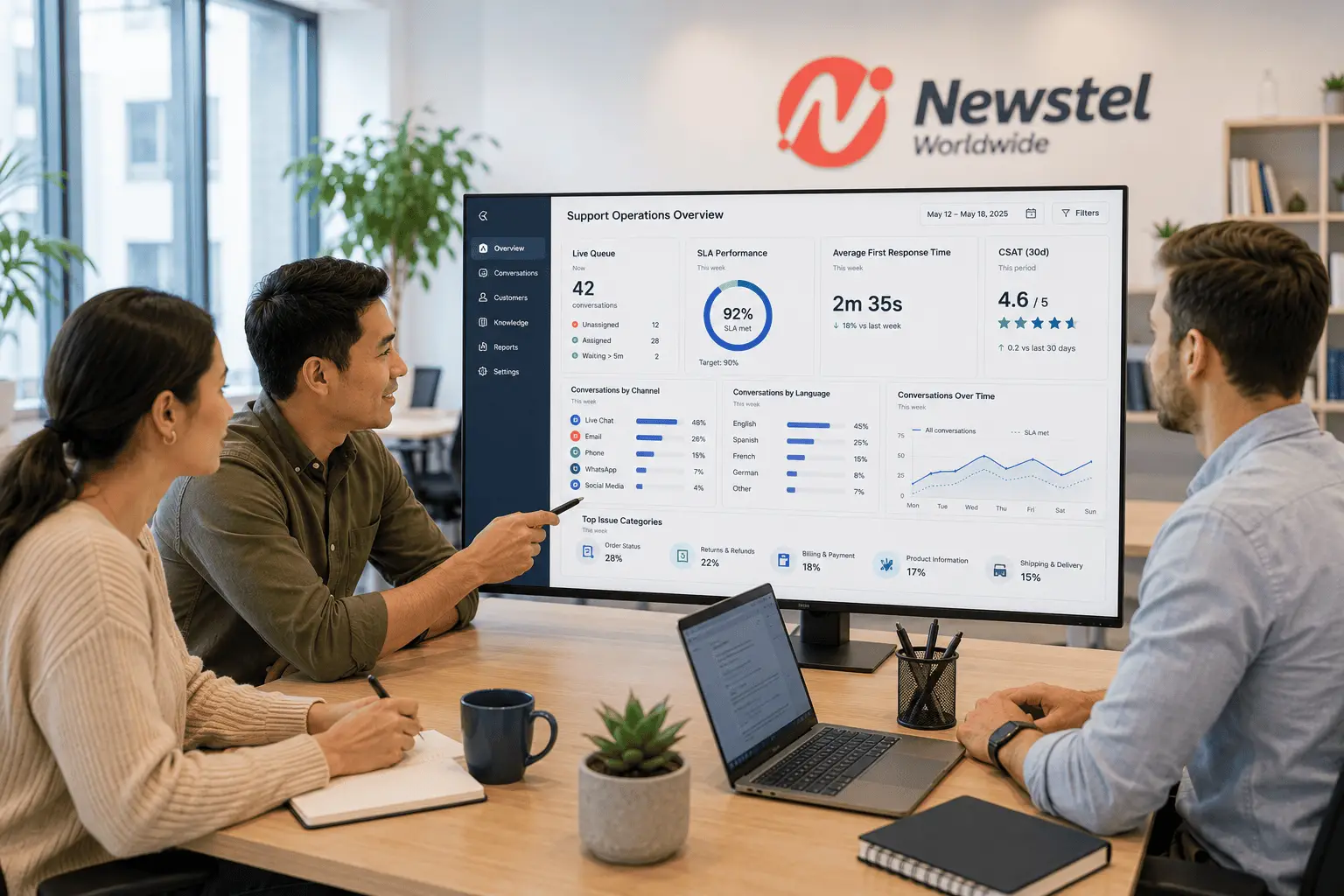
Track service performance by language and channel, including:
- first response time;
- time to resolution;
- first-contact resolution rate;
- customer satisfaction score;
- escalation rate;
- repeat-contact rate; and
- quality assurance score.
Review results by market as well as overall. An average across all languages can hide a poor experience in an important region, especially where demand is growing quickly or your team relies heavily on translation support.
When an external support model can help
You do not need to build every language capability in-house from day one. An internal team may work well while demand is limited or predictable. As you add markets, channels or longer coverage hours, it can become harder to maintain the same speed, product knowledge and tone across every customer conversation.
At that point, a hybrid or customer service outsourcing model can give you additional language coverage, trained advisers and operational support while keeping your processes, systems and brand standards at the centre.
The aim is not to make support feel outsourced. It is to give your customers a consistent experience as your business grows.
Frequently asked questions
Real-time customer support is help delivered while the customer is actively trying to resolve an issue. It is most commonly provided through live chat, phone and messaging channels, where customers expect a quick response.
No. Real-time describes response speed, while 24/7 describes hours of availability. You can provide rapid responses during selected operating hours or round-the-clock coverage where customer demand justifies it.
AI can help your team translate, classify queries, retrieve information and suggest responses. For complex, sensitive or high-value cases, human oversight remains important to maintain accuracy, empathy and appropriate local context.
Live chat, phone and messaging are usually the strongest options because they allow customers to receive a prompt response. The right mix depends on the urgency and complexity of your customers’ most common queries.
Use a combination of speed, resolution and quality measures. First response time, time to resolution, customer satisfaction, repeat-contact rate and quality assurance scores provide a more useful picture than response speed alone.
Build a support experience that works across markets
Real-time support in multiple languages is not about responding as quickly as possible at any cost. It is about giving customers clear, accurate help at the moment it matters, in a language they understand and through a channel they trust.
Expanding into new markets should not mean giving customers a different standard of support. If language coverage is starting to stretch your internal team, Newstel can help you build multilingual support that feels like part of your business. Explore our multilingual customer service outsourcing solutions.