


You may not be shocked to hear that e-commerce businesses across almost every sector imaginable still face growing pressures to meet their customers’ expectations, especially when it comes to customer experience (CX).
For all the advancements in automation, AI, and fulfilment logistics, many modern businesses are struggling to gain a firm grip on their customer-facing strategy.
From cyberattacks to operational inefficiencies and outdated CX strategies, we explore five critical challenges e-commerce businesses face today, with real-world examples that highlight the consequences of falling behind.
Let’s dive in.
1. Cybersecurity failures undermining trust: The infamous M&S cyberattack
One of the most recent major UK cyberattacks occurred in April 2025, targeting UK retailer Marks & Spencer. Orchestrated by the hacker group Scattered Spider, the breach crippled M&S’s ability to process online orders, froze contactless payment systems across stores, and disrupted inventory logistics.
This wasn’t just a tech failure; it became a CX crisis. Customers were met with vague, often absent communication, and many turned to social media to voice concerns about disrupted purchases and missing orders.
The financial toll was significant, with weekly sales losses estimated at £40 million. But the reputational damage could have longer-term consequences, especially as digital trust is now a cornerstone of retail loyalty.
Newstel says: Cybersecurity is now central to customer experience as it translates to consumer trust. That means your business must prioritise its cyber resilience strategies or risk large-scale operational paralysis and customers taking their business elsewhere.
2. Legacy systems slowing down fulfilment: Emma Sleep’s logistics nightmare
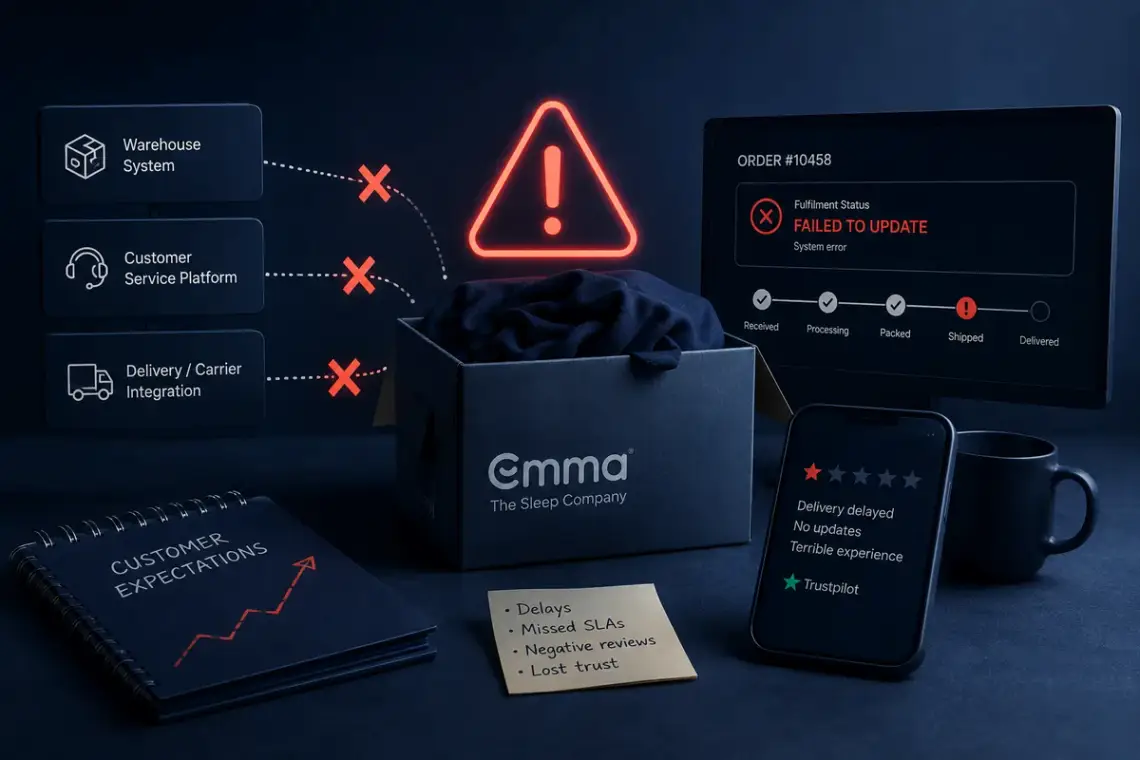
Emma Sleep, a popular mattress brand, faced backlash after migrating to a new warehouse and customer service platform. The result? Weeks-long delivery delays, botched orders worth hundreds of pounds, and a flurry of complaints on platforms like Trustpilot.
This misstep was particularly damaging to a company known for its superior level of customer convenience. As competitors offer next-day delivery and instant tracking, Emma’s failure to smoothly transition operational infrastructure proved to be a costly oversight.
Newstel says: Operational agility is a non-negotiable in the modern e-commerce environment. Poor planning during technology upgrades can rapidly erode customer confidence.
3. Poor communication with customers: House of Fraser’s post-rebrand chaos
Following a rebrand in late 2024, House of Fraser, along with other Frasers Group brands such as Sports Direct and Game, experienced weeks of delays in fulfilling online orders.
Customers flocked to social media in droves to complain about vague delivery timelines, no tracking updates, and a general lack of communication from House of Fraser.
Despite House of Fraser later citing “unprecedented demand” as the reason for delivery issues, the brand’s failure to proactively communicate or provide transparent updates created a damaging experience.
The outcome? Social channels and forums are flooded with frustrated shoppers warning others about their treatment and general lack of response.
Newstel says: In moments of crisis, proactive and transparent communication is critical. Responsiveness and transparency are key. Silence or deflection will only damage brand image and reputation, so there’s no room for burying your head in the sand.
4. Not embracing and adopting new CX technologies
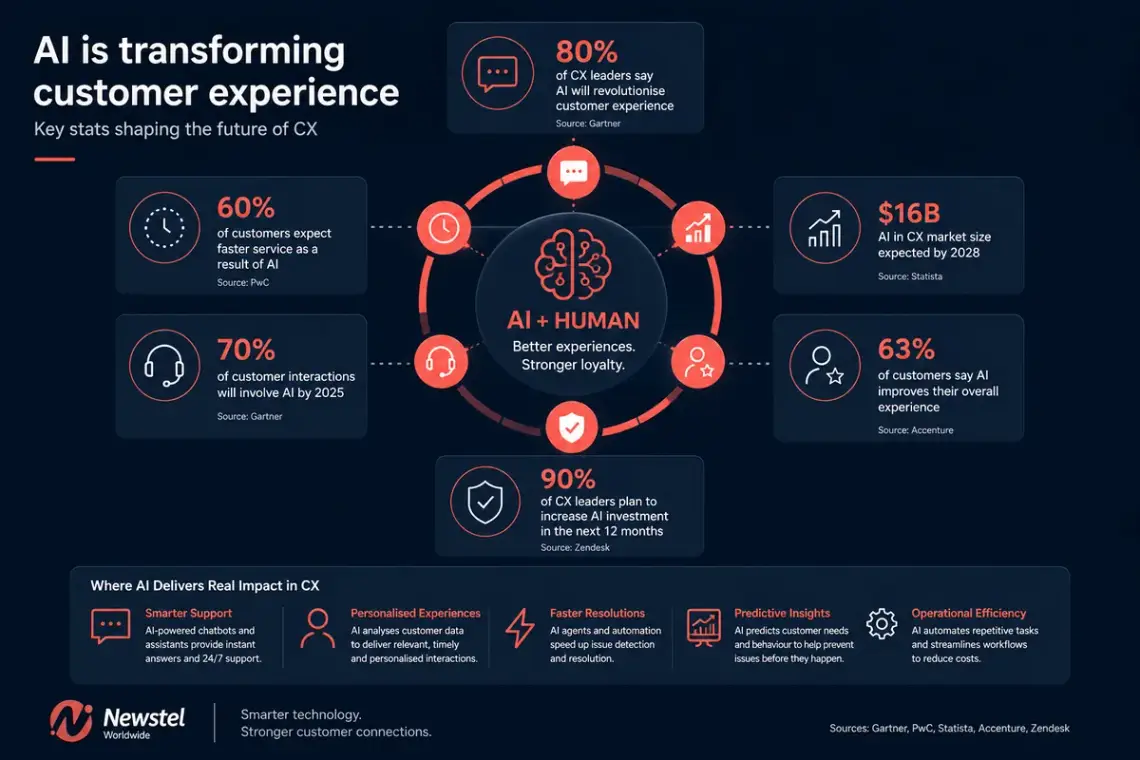
Many of your competitors are starting to embrace, or have already embraced, AI-powered customer support, especially among Gen Zers. But despite this newfound acceptance, many e-commerce brands still rely on clunky, outdated, and fragmented technologies and processes to support their CX efforts.
Many fashion and home goods brands, for example, are falling behind their more tech-savvy rivals.
By failing to offer options like 24/7 support, responsive app tracking, or automated customer contact channels, small issues can frequently escalate into bigger problems and lost customers.
Newstel says: Customer expectations have evolved significantly, and they’ll continue to do so. Brands that fail to embrace new ways of working (particularly with AI) risk getting left behind – which means fewer sales and less cash in the bank.
As a modern e-commerce business, nuance is the way forward. Working with AI and automated customer service technologies to complement your human efforts and experience will result in consistent commercial growth.
5. Failure to scale during peak periods: Evri’s delivery and service issues
Last but not least, in our rundown of e-commerce CX challenges, we’re looking at scalability.
During seasonal peaks and key promotional months, many e-commerce businesses rely heavily on logistics partners like Evri. But Evri has repeatedly come under fire for its handling of peak demand.
Evri has often been criticised for delayed parcel deliveries, damaged goods, and a general lack of accountability. A viral incident caught on CCTV a while back showed an Evri driver hurling a package over a fence. Just one of the countless stories shared by frustrated customers.
Complaints about the absence of customer support and difficult refund processes are frequent, especially during busy retail seasons. It’s also worth noting that while Evri is often in the spotlight (largely for the wrong reasons), other popular courier delivery services are known for fulfilment issues during peak periods.
Retailers who rely on a single courier like Evri often bear the brunt of customer dissatisfaction, especially when the courier’s performance falls short and no contingency plan is in place.
Newstel says: Customer Support scalability and logistics readiness are essential during peak periods. E-commerce businesses must demand more from their partners or risk brand damage by association.
Don’t just respond, reinvent your customer experience

CX in e-commerce is no longer an afterthought; it’s the front line of brand loyalty. As the above examples show, even established retailers are vulnerable if they fail to take charge of their CX strategies and keep on evolving.
So, what do you do when deciding how to improve your brand’s e-commerce customer experience? To stay competitive, we recommend:
- Embedding cybersecurity into your CX strategy
- Modernising your operational infrastructure
- Communicating transparently and with a human touch during crises
- Using AI and automation technologies to complement your human-led efforts
- Planning for scalability beyond standard operations alone
Overcome your most pressing CX challenges with Newstel
If you’re an e-commerce brand or a senior decision-maker, now is the time to assess your CX strategy.
Are you ready for the next disruption? Is your technology mix built to scale with demand? Are your customers speaking positively about their experience?
Reach out and let’s talk about how we can help your business adapt to these emerging CX challenges.