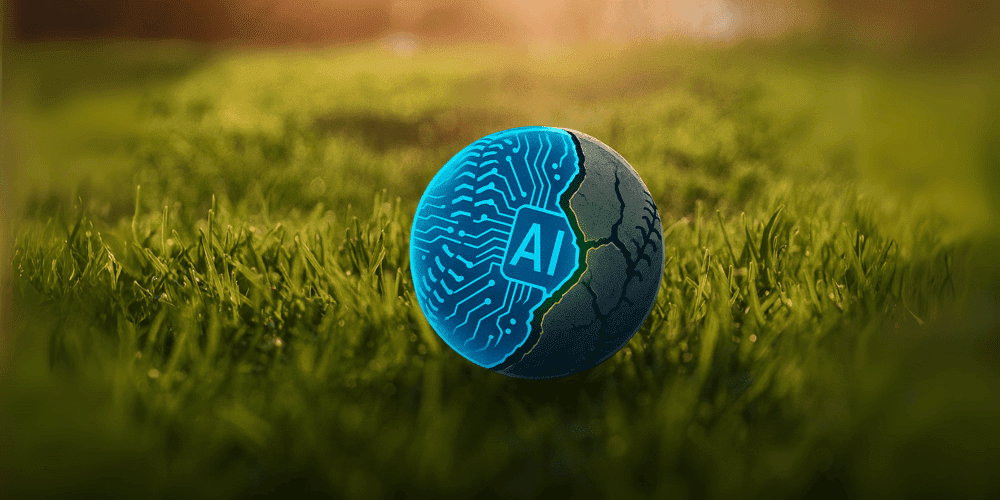
AI was meant to be a straight shot; simple, predictable and right on target. Instead, for some businesses it’s proving a bad pitch. Good out of the hand, but spinning the wrong way by the time it lands. Two points lost!
Moving away from the curveball puns, the reality is that businesses are racing to deploy AI as a quick fix to alleviate recruitment pressures and ever increasing overheads. Whilst the benefits are real, the risks of moving too quickly are becoming just as clear.
Salesforce’s bold leap forward
Salesforce recently announced one of the biggest workforce shake-ups of the year, cutting up to 4,000 customer support jobs and replacing them with its AI agent, Agentforce. This new system now handles half of all customer interactions (around 1.5 million per month) while the remaining human agents will act as “omni-channel supervisors”, stepping in when human judgement is needed.
The company insists that customer satisfaction has remained stable, and for CEO Marc Benioff, this is proof that AI can deliver on its promise of efficiency:
“I need less heads” he said, praising AI’s ability to streamline operations.
Yet even Benioff stopped short of framing AI as a “total replacement”. He was quick to stress that human creativity, fresh graduate talent and empathetic oversight still have an irreplaceable role. Salesforce may have pushed far, but it still hasn’t pushed all the way.
Klarna paying the price for boldness
Swedish fintech Klarna, however, is a prime example of what happens when cost cutting runs ahead of customer care. In 2022, it shed around 700 customer service roles, betting heavily on an OpenAI-powered assistant to manage circa 75% of queries. At first, the numbers looked strong; millions of chats automated, costs reduced and efficiency gained.
But cracks soon appeared. Customers noticed a drop in service quality, satisfaction fell and complaints grew. CEO, Sebastian Siemiatkowski, has since admitted that the pendulum swung too far. Klarna is now set to reverse course, hiring human agents back under a more flexible model that draws in students, rural workers and even passionate customers.
His warning is stark:
“When cost becomes the dominant factor, quality suffers.”
Sebastian has also cautioned that if too many firms adopt AI as a blunt instrument for headcount reduction, the impact on white-collar jobs could trigger a recession. Yikes.
A wider wake up call
Klarna’s rethink isn’t an isolated case. The CEO of BT has warned that AI adoption could drive job cuts even beyond what’s already been planned, while economists stress the importance of retraining and redeploying talent rather than simply cutting it.
On the flip side, research from the World Economic Forum suggests AI could ultimately create more jobs than it replaces, particularly in areas where human creativity, empathy, and judgement are paramount.
The challenge isn’t whether to adopt AI, but more how.
AI is a tool, not a shortcut
The rush to deploy AI is understandable; competition, costs and customer expectations are relentless. But companies that view AI as a silver bullet risk doing long-term damage in exchange for short-term savings.
Salesforce shows what’s possible when automation is blended with human oversight. Whilst Klarna shows what happens when the pendulum swings too far towards replacement. Together, they remind us that AI’s real value comes not from cutting people out, but from combining human empathy with machine efficiency.
AI can save money. But without balance, it might just cost you more than you bargained for.
Get in touch
At Newstel, we believe the future of service isn’t about replacing people with machines, but equipping people with the right tools to deliver better outcomes. Let’s not forget, technology should serve customers, not sideline them.
If you’d like to explore how to strike that balance in your own business, get in touch with us today.