

Executive Summary
In today’s competitive landscape, outsourcing to a Business Process Outsourcing (BPO) provider is often seen as a strategic move for businesses who are aiming to reduce costs, improve efficiency, and enhance customer experiences. However, simply engaging with a BPO partner is not enough. This whitepaper explores best practices for maximising the value of your BPO relationship, ensuring alignment with your business objectives, and driving continuous improvement.
Introduction
In the current economic climate of inflationary pressures, labour shortages, and a heightened focus on cost-efficiency, employing a BPO offers several strategic advantages for UK businesses. These include filling skill gaps, providing flexible workforce solutions, mitigating rising wage costs, accessing the latest technology, maintaining or improving service levels, and reducing risks through multiple operating locations and disaster recovery planning.
Whilst Business Process Outsourcing has been seen to have transformed the way contact centres operate, the success of a BPO partnership hinges on effective collaboration, clear communication, and robust performance management.
The Financial Benefits of Employing a BPO
Outsourcing to a BPO can deliver substantial financial advantages that impact both the bottom and top line. A BPO helps reduce costs to businesses by providing trained staff, infrastructure, and investments in tailored technology. In addition, flexible staffing models allow companies to scale operations without the costs of hiring or redundancies, while optimising the BPO’s expertise reduces costly errors and improves efficiency.
In terms of revenue:
- Customer Service Teams are often termed as ‘cost centres’ to the wider business, as they typically are not generating revenue. However, a well-aligned BPO can enhance customer satisfaction and loyalty, which will drive repeat business and increase customer retention rates.
- Outsourcing can also accelerate time-to-market for new products or services and enables organisations to concentrate resources on innovation and revenue-generating initiatives.
- BPOs are agile in adapting to changing market conditions and offering access to advanced technology, delivering innovation without high capital investment.
- Risk mitigation is another benefit, as outsourcing transfers operational risks and ensures uninterrupted service through robust disaster recovery plans and multiple operating locations.

Understanding the Challenges
While BPO partnerships offer significant benefits, they require proactive management to overcome day-to-day challenges. Misaligned goals, unclear service level agreements (SLAs) and the inability to deliver key performance indicators (KPIs) can lead to poor outcomes. Relying too heavily on standard KPI / SLA reporting can sometimes miss the key factors that drive your business and customer success, whilst ineffective communication can result in misunderstandings and delayed issue resolution. Without regular reviews and innovation, processes risk stagnation, and cultural or geographic differences can impact service delivery.
Sharing Your Vision, Mission, Objectives & Values
Aligning your chosen BPO with your company’s vision, mission, and objectives will always produce the best results. Employees who share and understand your company values will demonstrate higher motivation and inevitably reduce turnover, leading to higher service quality.
Unified goals ensure a focus on KPIs that drive growth, and a clear understanding of objectives allows BPOs to anticipate challenges and propose innovative solutions. Trust and collaboration ensure a stronger partnership, making the BPO an extension of your internal team.
Ensuring your BPO is an ethical employer is crucial for safeguarding your brand reputation and aligning with corporate social responsibility goals. An ethical BPO upholds fair and transparent labour practices, complies with minimum wage laws, and actively combats modern slavery and exploitative working conditions.
Maximising Your BPO Partnership
Clear Objectives and Advanced Metrics
The best way to ensure alignment with your business’s broader goals is by outlining specific, measurable goals as part of your ongoing partnership. While traditional KPIs such as Average Handle Time (AHT), First Call Resolution (FCR), Customer Satisfaction (CSAT), and Net Promoter Score (NPS) remain essential, your BPO should be able to incorporate advanced metrics like Sentiment Analysis and eXpected Net Promoter Score (xNPS), which offer deeper insights. These tools evaluate agent empathy, customer sentiment trends, and predicted satisfaction rates, empowering businesses to drive targeted improvements.
Comprehensive Onboarding and Training
According to Ryan Strategic Advisory’s latest report (2025 CX Technology and Services Buyers’ Outlook), 39% of surveyed participants felt that access to skilled front-line talent would be one of their biggest pain points of 2025. As a result, many businesses are very much open to maximising their BPO partnership to deliver scale and flexibility where needed.
However, to ensure the production of highly skilled agents, comprehensive onboarding and training is paramount. Agents should be thoroughly trained on the products, services, and brand values, with customer personas and scenarios shared to encourage empathy. This approach helps agents understand customer needs more deeply, enabling them to provide high-quality service that reflects the company’s core principles.
Any good outsource partner will implement a Learning Management System (LMS) that supports specific learning objectives, including compliance and tests understanding. This ensures agents are equipped with up-to-date skills, whilst promoting operational efficiency and improving customer service. The LMS will help to streamline training, reduce onboarding time, and deliver valuable insights for continuous improvement, driving better performance and long-term success for the business.
Open Communication and Dedicated Account Management
Open communication plays a vital role in ensuring a smooth partnership. Regular meetings and collaboration tools help maintain transparency, while a dedicated Account Manager provides focused attention.
Taking a personal, tailored approach to understanding the business model, priorities, and needs ensures that your business gets the attention it deserves. This level of individualised care helps resolve issues more efficiently and keeps operations running smoothly, offering a level of support that prioritises success.
Regular meetings with your Account Manager are crucial to ensure they understand your business priorities and the level of investment and time dedicated to your account. These discussions help the Account Manager support planning, training, and performance management while effectively reporting on KPIs and SLAs, keeping your business priorities at the forefront.
Technology Optimisation
As reported by Contact Babel in their latest UK Customer Experience Decision-Makers’ Guide 2024-25, 46% of participants as part of their study reported that current legacy technology within their contact centre was a major problem – and holding them back.
Whilst optimisation via the use of technology should be a key area of focus, many businesses are often unsure on the best approach when it comes to the adoption of new technology and are often left with such legacy systems that hold them back.
By engaging with a BPO partner, businesses can stay ahead of the ‘tech curve’. Many BPOs specialise in the implementation and utilisation of the latest tools and technologies. This includes (but not limited to):
- AI
- Automation
- Chatbots
- CRM and Case Management
- Enhancing utilisation of current systems and software
- Quality Assurance and Workforce Management (enhanced by AI)
BPO providers often develop partnerships with leading technology providers, which allows your business to access cutting-edge contact centre solutions without you having to make sizable investments.
Regular Performance Reviews
To ensure that performance remains on track, monthly or quarterly reviews are essential. These sessions allow businesses to evaluate their progress against SLAs and KPIs, identifying areas for improvement and addressing them promptly. This process promotes a culture of continuous improvement and ensures long-term success.
Innovation and Process Improvement
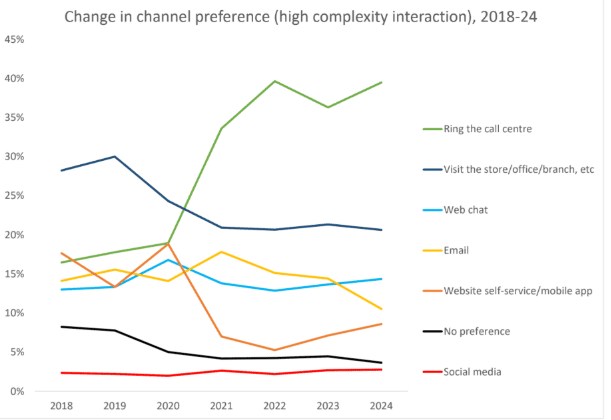
On the subject of innovation, whilst AI remains the buzzword of today, Contact Babel’s recent study found that over 40% of participants studied still preferred to call the contact centre when their interaction was highly complex. Is this because AI is unable to support the type of customer query at hand, or is there a problem with the processes being deployed that negatively impact the customer?
Encouraging process improvement is vital to staying agile in a competitive market. BPO providers are well-positioned to suggest improvements and should be actively involved in brainstorming sessions and process reviews. Input from you, the client, ensures the BPO remains proactive and aligned with the evolving needs of your business.
Collaborative Partnership
Creating a strong, collaborative partnership remains absolutely key to long-term success. When businesses view their BPO as an extension of their in-house team, it creates a sense of shared achievement and cultivates open, positive communication. This teamwork ensures both sides remain aligned with common objectives, driving more impactful and successful outcomes.
Ensure you can align the two teams as soon as possible, which also includes the social bonding between team members, no matter where they are located.
Conclusion
Maximising the value of your BPO partnership requires strategic effort from both parties. By setting clear goals, engaging in open communication, optimising technology, and driving continuous improvement, contact centre professionals can ensure their BPO provider delivers exceptional results.
Maintaining a strong, collaborative relationship and staying adaptable to evolving business needs will ensure long-term success for your company. As both parties work together to innovate and align on priorities, the partnership becomes more than just a service provider — it becomes a true extension of the team, contributing to sustained growth and enhanced customer satisfaction.
Ready to elevate your BPO partnership?
Contact us for a consultation and discover how Newstel can help you unlock the full potential of your outsourcing strategy.